Nakshatraa Grand
Tree of lights
.png)
A Constellation Brought Into the Indian Home
The nakshatras — the 27 lunar mansions of Indian astronomical tradition — are one of the oldest and most sophisticated sky-mapping systems in human history. They are also one of the most beautiful: a way of understanding the night sky not as random points of light, but as a pattern of connection, each star in relationship to every other. Nakshatraa Grand takes this tradition as its conceptual foundation; a lighting object designed around the visual intelligence of the Indian astronomical tradition, expressed through contemporary product design and material technology. It is Studio ABD's most ambitious home lighting design project for Mubhi: an object that is simultaneously a lamp, an installation, and a statement about what Indian cultural heritage can become when it is designed for rather than displayed.
.png)
The Architecture of Light — Engineering and Craft in Equal Measure
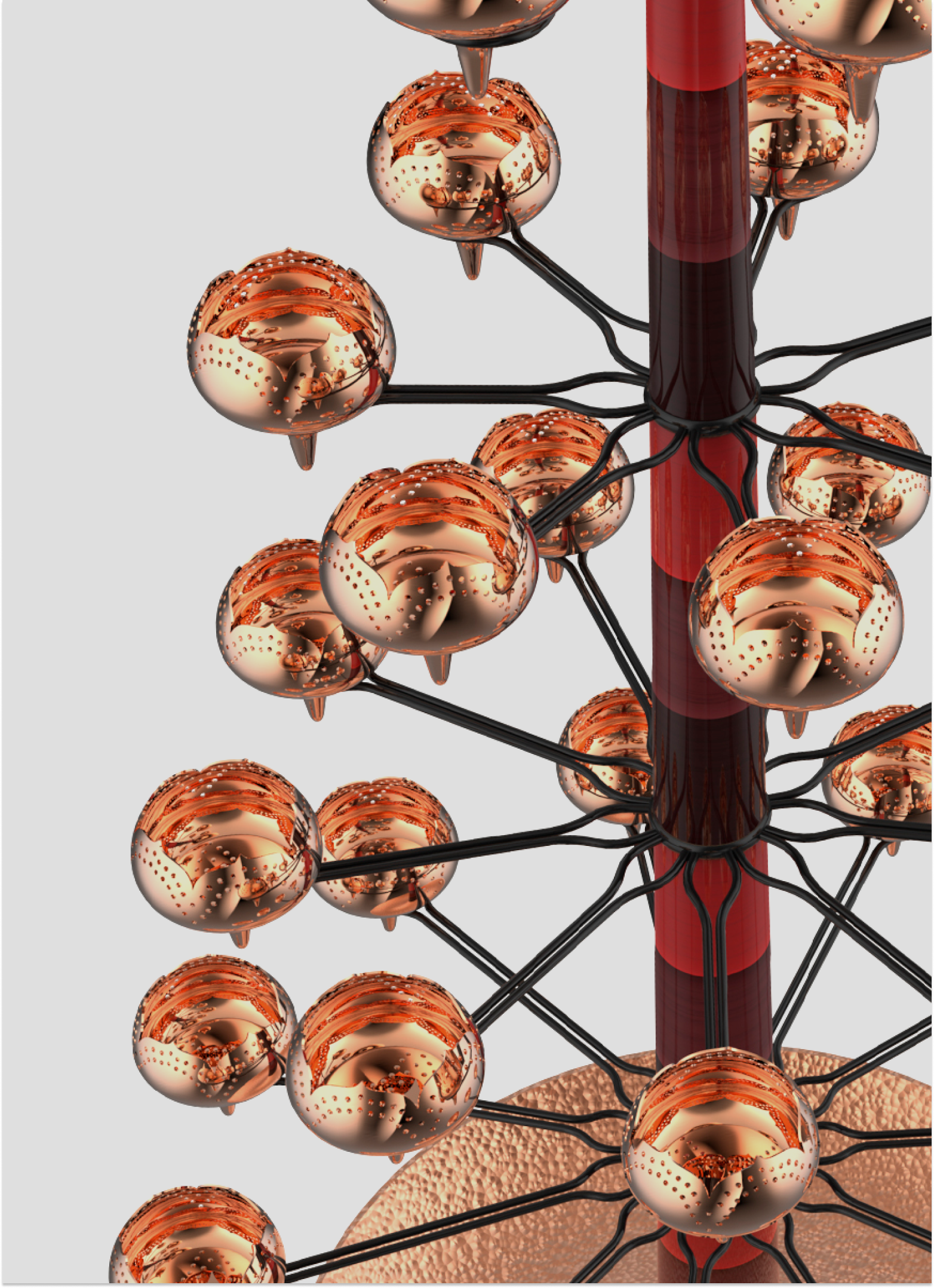
The Nakshatraa Grand's structure distributes light the way a constellation distributes itself across the sky: not uniformly, but with intention. Each point of light is positioned in relationship to every other; creating, in aggregate, a whole that has a character and a presence that the individual elements do not have alone. The engineering precision required to achieve this distribution at the scale of a domestic lighting object demanded the same rigour that Studio ABD applies to any complex product design project: structural analysis, prototype iteration, material testing, and the patient refinement of a form that has to be both visually extraordinary and domestically practical. The Nakshatraa Grand takes as long to make as it looks like it does; and that is exactly right.
.png)
The Mubhi Standard — Indian Craft, Contemporary Intelligence
Nakshatraa Grand is the fullest expression of what Mubhi, Studio ABD's own product design brand, was created to be: a range of objects that take Indian cultural intelligence as a design resource rather than a reference, and apply it to the creation of products that belong in the contemporary Indian home while being unmistakably rooted in the tradition that produced them. This is not nostalgic design. It is not cultural preservation. It is the living continuation of a tradition by a studio that takes it seriously enough to ask what it would become if it were designed today, for today, by people who understand both where it came from and where it belongs.